Certificates
On my quest to become a successful programmer/web developer, I've taken multiple online courses in the field. Most of them include a certificate at the end, awarded to students able to complete them. Below is the collection of certificates that I've earned in the field so far, along with course descriptions and quick overviews of the technologies taught in them.
Harvard
Harvard University, one of the most reputable institutions in the world, offers a broad variety of their classes online, via their online learning platform - edX.
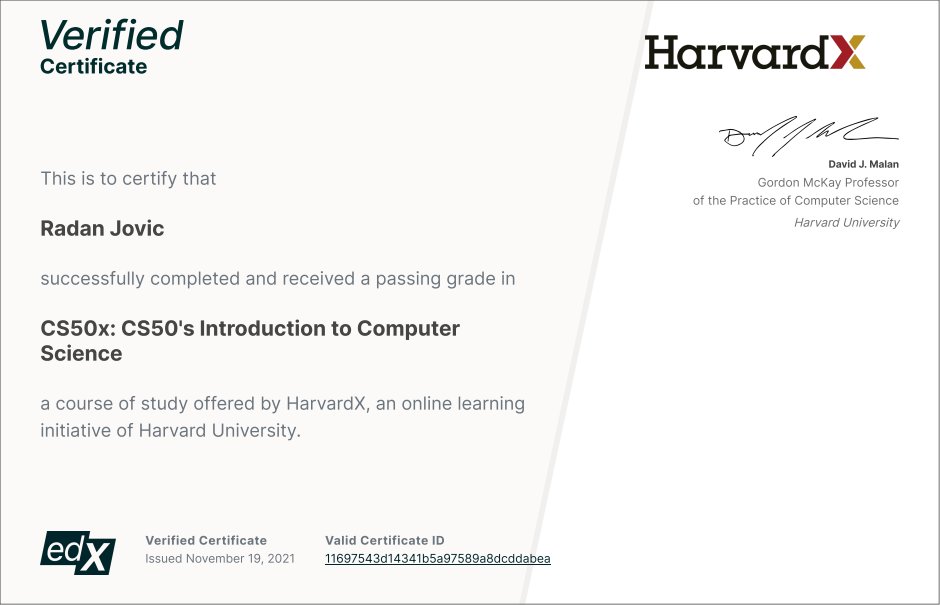
Certificate Name: CS50x: Introduction to Computer Science
Issued by: HarvardX (through edX - online learning platform)
Main Technologies taught: C, HTML, CSS, JavaScript, Python, SQL
CS50x: Introduction to Computer Science - Course Overview
CS50x is Harvard's course that gives students an introduction to the intellectual enterprises of computer science and the art of programming. This course teaches students how to think algorithmically and solve problems efficiently. Topics include abstraction, algorithms, data structures, encapsulation, resource management, security, software engineering, and web programming. Languages include C, Python, and SQL plus HTML, CSS, and JavaScript. Problem sets required by the course are inspired by the arts, humanities, social sciences, and sciences, and the course culminates in a final project. To complete this course and receive a certificate, students must submit and pass ten problem sets, ten labs, and one final project. Tests are automated.
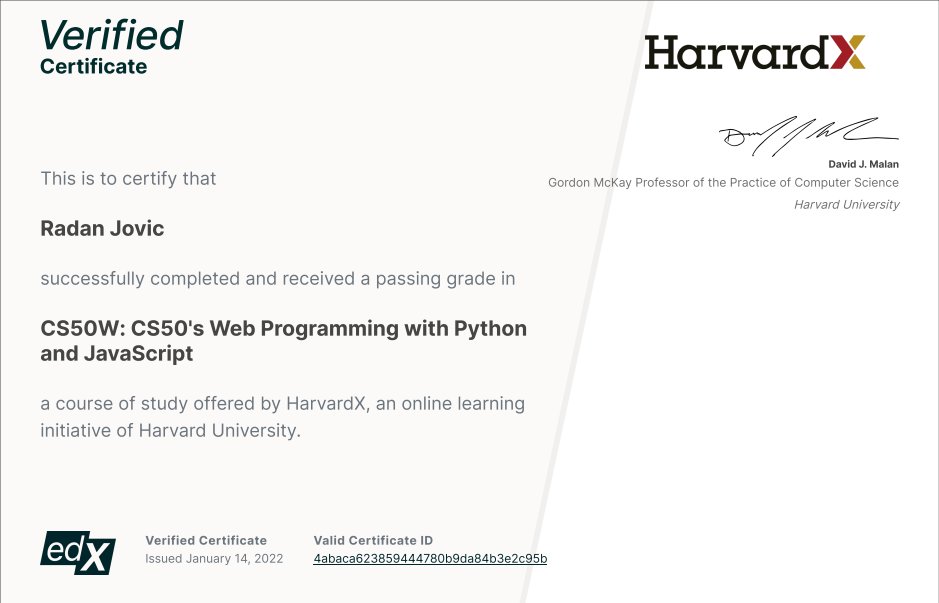
Certificate Name: CS50w: Web Programming with Python and JavaScript
Issued by: HarvardX (through edX - online learning platform)
Main Technologies taught: HTML, CSS, JavaScript, Python, SQL, Git, Django, React, Bootstrap, APIs
CS50w: Web Programming with Python and JavaScript - Course Overview
CS50w is Harvard's advanced course that picks up where CS50x leaves off, diving more deeply into the design and implementation of web apps with Python, JavaScript, and SQL using frameworks like Django, React, and Bootstrap. Topics include database design, scalability, security, and user experience. Through hands-on projects, students learn to write and use APIs, create interactive UIs, and leverage cloud services like GitHub. By semester’s end, students emerge with knowledge and experience in principles, languages, and tools that empower them to design and deploy applications on the Internet. Taking this course requires previous programming knowledge and experience (i.e. at least passing CS50x). To complete this course and receive a certificate, students must submit and pass a total of six projects and one final project, which are graded by humans employed by Harvard and CS50.
Free Code Camp
Free Code Camp is a non-profit organization offering a bunch of online courses focused on programming to students, for free.
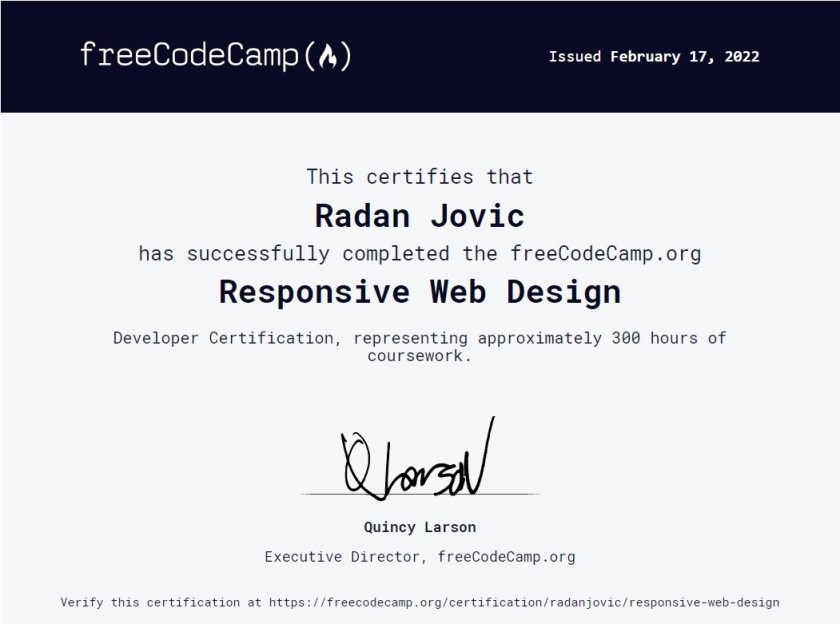
Certificate Name: Responsive Web Design
Issued by: Free Code Camp
Main Technologies taught: HTML, CSS, Accessibility, Responsive Design
Responsive Web Design - Course Overview
Responsive Web Design course and Certification, offered by Free Code Camp, teaches students languages that developers use to build webpages: HTML for content, and CSS for style and design. This course teaches responsive web design, by teaching CSS Grid, CSS Flexbox, and media queries, on top of basic HTML and CSS. This course represents approximately 300 hours of coursework. To complete this course and receive a certificate, students must submit and pass a total of five projects, that showcase skills taught in the course. Tests are automatic. In order to learn during the course, students also work on (and should pass) dozens of tests in multiple different course sections.
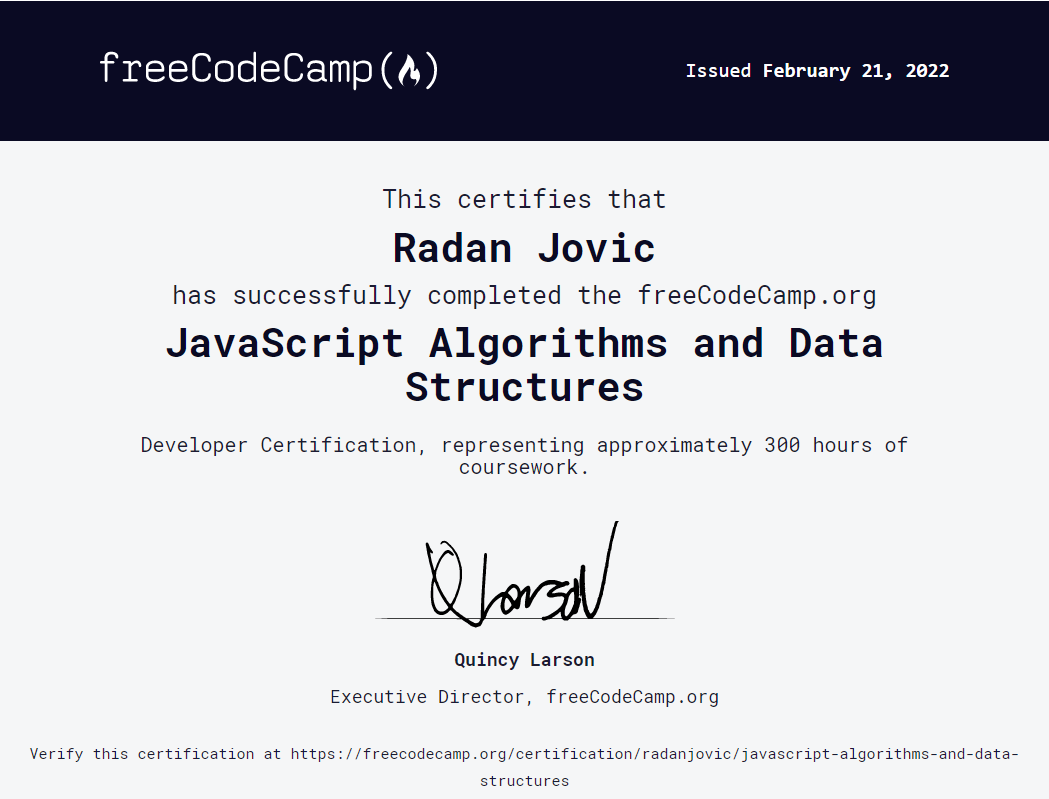
Certificate Name: JavaScript Algorithms and Data Structures
Issued by: Free Code Camp
Main Technologies taught: JavaScript, Algorithms, Data Structures, Object Oriented Programming, Functional Programming
JavaScript Algorithms and Data Structures - Course Overview
JavaScript Algorithms and Data Structures course and Certification, offered by Free Code Camp, teaches students basic and advanced features of JavaScript - the language of the web. While HTML and CSS control the content and style, JavaScript is used to make pages interactive. This course teaches students the fundamentals of JavaScript, including variables, arrays, objects, loops, functions, algorithms, and two of the most important programming styles or paradigms: Object-Oriented Programming(OOP) and Functional Programming (FP). This course represents approximately 300 hours of coursework. To complete this course and receive a certificate, students must submit and pass a total of five projects, that showcase skills taught in the course. Tests are automatic. In order to learn during the course, students also work on (and should pass) hundreds of tests in multiple different course sections.
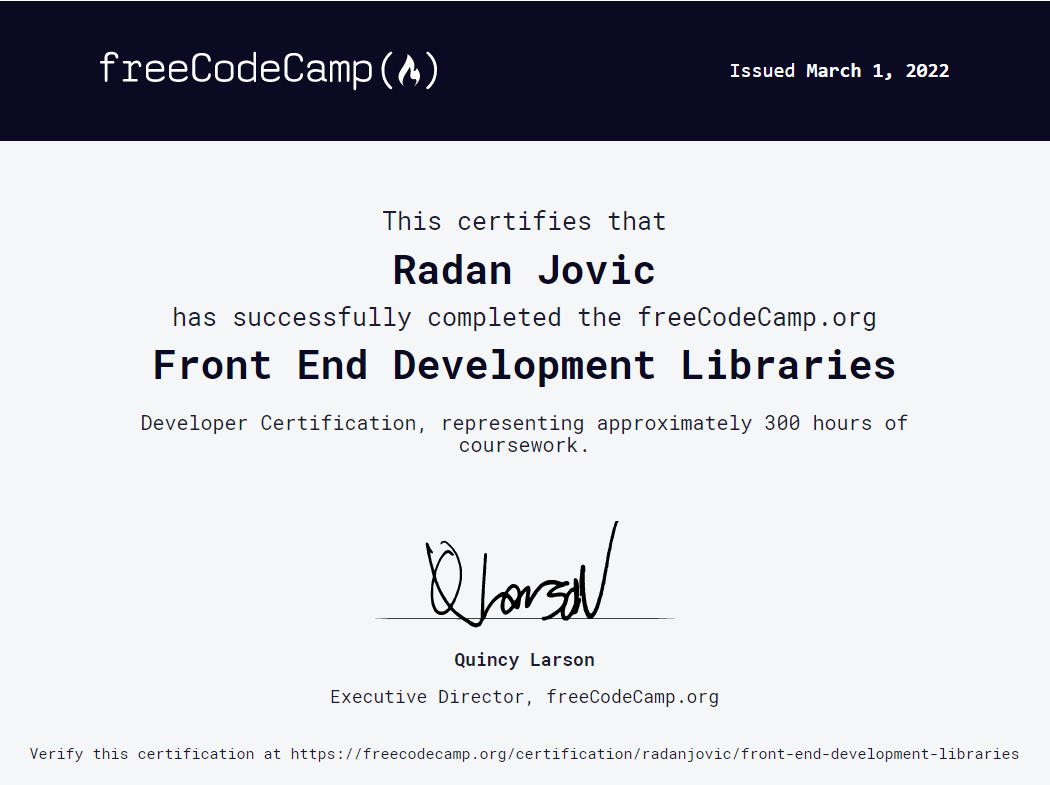
Certificate Name: Front End Development Libraries
Issued by: Free Code Camp
Main Technologies taught: Bootstrap, Sass, jQuery, React, Redux
Front End Development Libraries - Course Overview
Front End Development Libraries course and Certification, offered by Free Code Camp, teaches students about the most popular and relevant front-end development libraries, like Bootstrap, Sass, jQuery, and React. This course teaches students to quickly style sites with Bootstrap, add logic to CSS styles and extend them with Sass, how to apply jQuery to make writing JavaScript code easier, and how to create powerful and beautiful Single Page Applications (SPAs) with React and Redux. This course represents approximately 300 hours of coursework. To complete this course and receive a certificate, students must submit and pass a total of five projects, that showcase skills taught in the course. Tests are automatic. In order to learn during the course, students also work on (and should pass) dozens of tests in multiple different course sections.
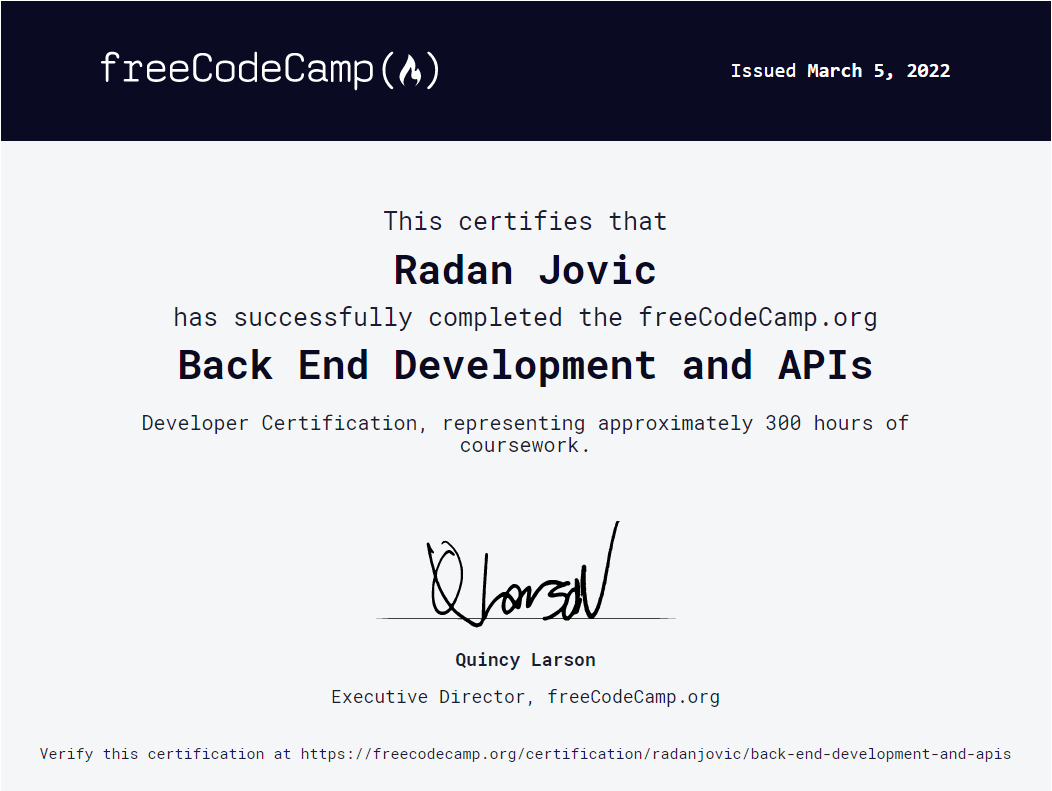
Certificate Name: Back End Development and APIs
Issued by: Free Code Camp
Main Technologies taught: JavaScript, Node.js, npm, Express.js, MongoDB, Mongoose, APIs
Back End Development and APIs - Course Overview
Back End Development and APIs course and Certification, offered by Free Code Camp, teaches students about backend web development and API development with JavaScript (Node.js). This course teaches building backend apps with Node.js, npm (Node Package Manager), and Express web framework, and database development with MongoDB and Mongoose library. This course represents approximately 300 hours of coursework. To complete this course and receive a certificate, students must submit and pass a total of five projects, that showcase skills taught in the course. Tests are automatic. In order to learn during the course, students also work on (and should pass) dozens of tests in multiple different course sections.
Udemy
Udemy is an online learning platform offering students an enormous selection of courses. Courses are created and taught by knowledgeable instructors.
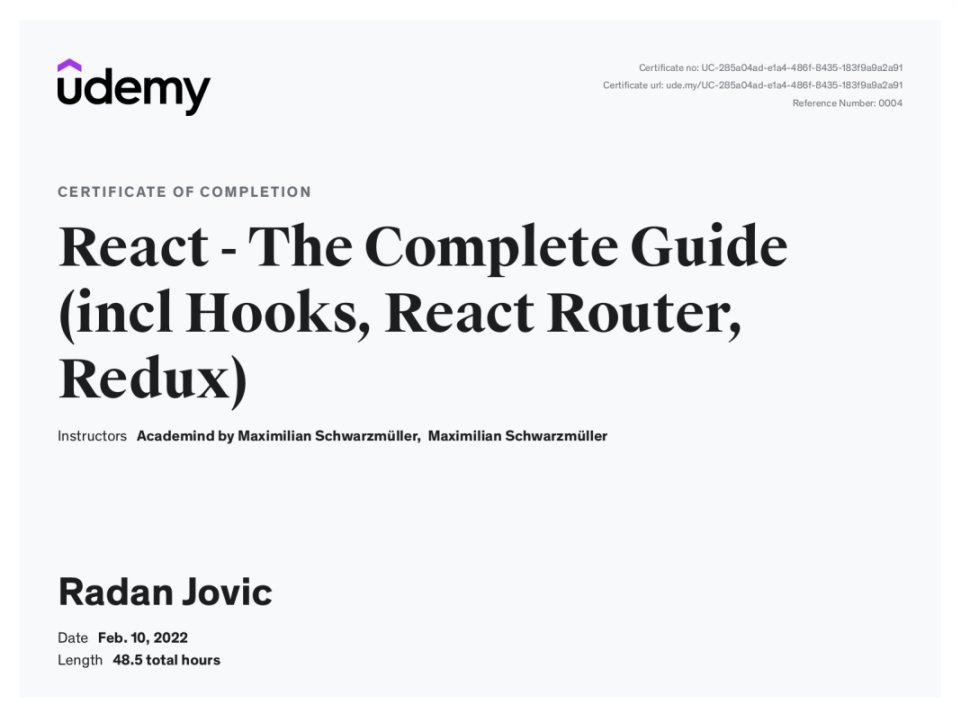
Certificate Name: React - The Complete Guide
Issued by: Academind (through Udemy - online learning platform)
Main Technologies taught: React, Functional React (Hooks), React Router, Redux, JavaScript ES6, React Animations, React Testing, React with TypeScript
React - The Complete Guide - Course Overview
React - The Complete Guide, taught by amazing Maximilian Schwarzmueller and his Academind, is a course on the newest React core features and advanced concepts. This course teaches functional React (with an overlook at Class-Based React) from the ground up - from all the core basics to advanced topics, through theory, a bunch of examples and demos, and many assignments and exercises. To complete this course and receive a certificate, students must watch all the lectures in the course, pass automated tests created by instructors along the way, and, optionally, code along with the instructor, to familiarize themselves further with web development.
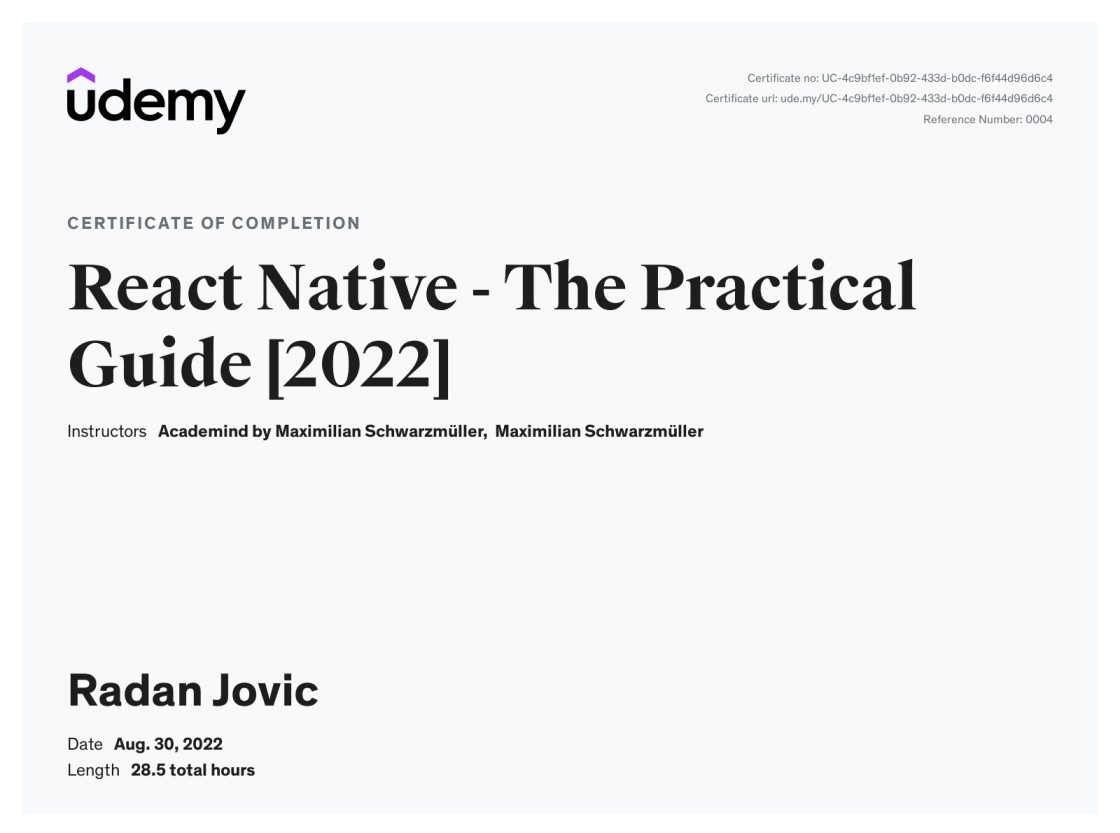
Certificate Name: React Native - The Practical Guide
Issued by: Academind (through Udemy - online learning platform)
Main Technologies taught: React Native, Functional React Native (with Hooks), React Navigation, styling React Native apps, Redux and Context, Authentication and Http Requests, Native Features (Camera, Location, SQLite) with React Native, Local and Push Notifications
React Native - The Practical Guide - Course Overview
React Native - The Practical Guide, taught by amazing Maximilian Schwarzmueller and his Academind, is a course on the newest React Native core features and advanced concepts. This course teaches functional mobile development with React Native from the ground up - from setting up the environment and starting development, to using all the core React, and many Native features in React Native apps, through theory, a bunch of examples and demos, and many assignments and exercises. To complete this course and receive a certificate, students must watch all the lectures in the course, pass automated tests created by instructors along the way, and, optionally, code along with the instructor, to familiarize themselves further with mobile development in React Native.
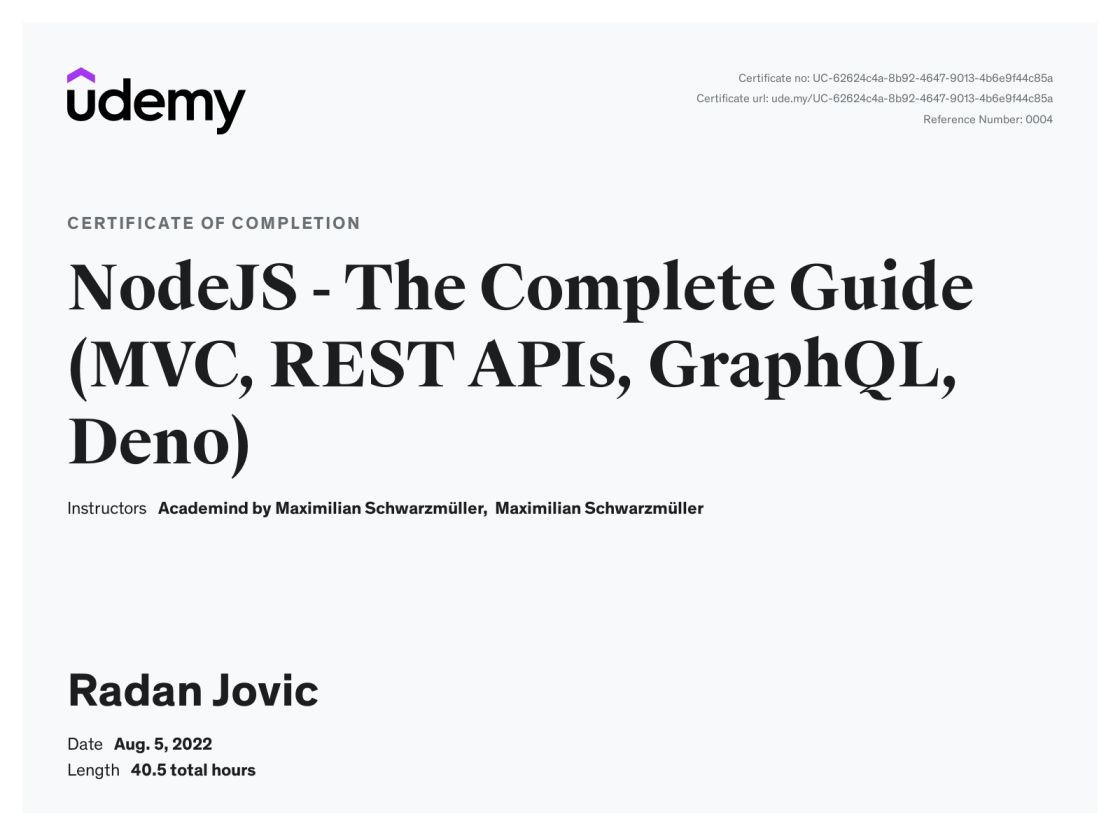
Certificate Name: NodeJS - The Complete Guide (MVC, REST APIs, GraphQL, Deno)
Issued by: Academind (through Udemy - online learning platform)
Main Technologies taught: NodeJS, Express.js, Server-side rendering templates with EJS and Express.js, MVC, Node and SQL/NoSQL databases, Sessions and Cookies, Authentication and Authorization, Sending emails, Validation, File upload and download, Pagination, Payments, REST APIs, Websockets and Socket.io, GraphQL, Testing and Deploying Node.js apps, Node.js and Typescript, Deno.js
NodeJS - The Complete Guide (MVC, REST APIs, GraphQL, Deno) - Course Overview
NodeJS - The Complete Guide, taught by amazing Maximilian Schwarzmueller and his Academind, is a course on one of the most popular backend solutions today - Node.js and Javascript. This course teaches NodeJS and its core features (templating, working with databases and files, authentication and authorization, validation, using node as REST API and GraphQL backend, testing, ...) from the ground up, through theory, a bunch of examples and demos, and many assignments and exercises. To complete this course and receive a certificate, students must watch all the lectures in the course, pass automated tests created by instructors along the way, and, optionally, code along with the instructor, to familiarize themselves further with web development.
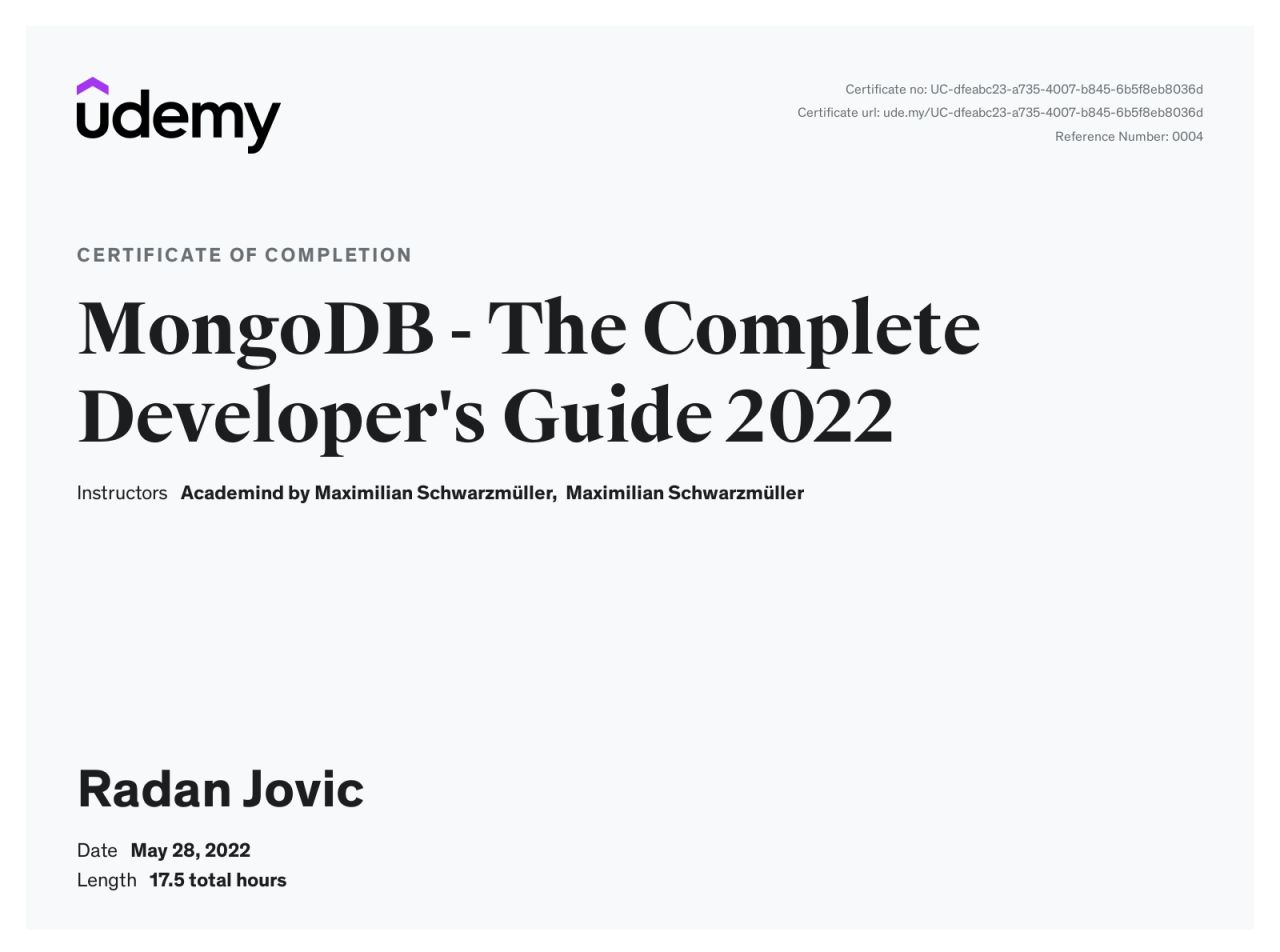
Certificate Name: MongoDB - The Complete Developer's Guide
Issued by: Academind (through Udemy - online learning platform)
Main Technologies taught: MongoDB, NoSQL, CRUD operations in MongoDB, Schemas and Relations, MongoDB Shell and Drivers, MongoDB Aggregation, MongoDB Auth, Security, and Performance, MongoDB Realm
MongoDB - The Complete Developer's Guide - Course Overview
MongoDB - The Complete Developer's Guide, taught by amazing Maximilian Schwarzmueller and his Academind, is a course on the most popular NoSQL database - MongoDB database. This course teaches MongoDB and its core features (create (insert), read(find), update and delete operations, working with shell and with drivers, schemas and relations, aggregation framework, optimizations and performance of MongoDB, auth and security, indexes, ...) from the ground up, through theory, a bunch of examples and demos, and many assignments and exercises. To complete this course and receive a certificate, students must watch all the lectures in the course, pass automated tests created by instructors along the way, and, optionally, code along with the instructor, to familiarize themselves further with web development.
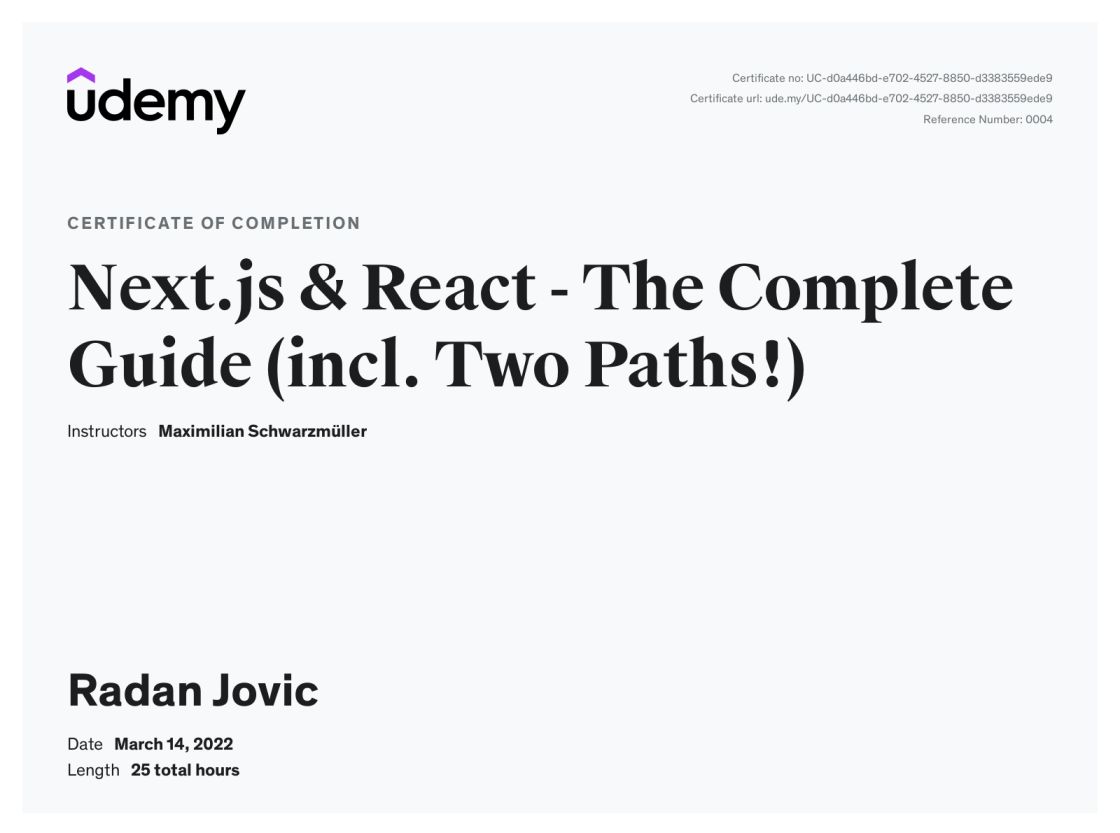
Certificate Name: Next.js - The Complete Guide
Issued by: Academind (through Udemy - online learning platform)
Main Technologies taught: Next.js, File-based Routing, Static Generation, Incremental Static Generation, Server-side Rendering, Next.js API implementation, NextAuth
Next.js - The Complete Guide - Course Overview
Next.js - The Complete Guide, taught by amazing Maximilian Schwarzmueller and his Academind, is a course on the most popular production framework for React -Next.js. This course teaches Next.js and its core features(file-based routing, static generation and SEO optimization, and full-stack API development) from the ground up, through theory, a bunch of examples and demos, and many assignments and exercises. To complete this course and receive a certificate, students must watch all the lectures in the course, pass automated tests created by instructors along the way, and, optionally, code along with the instructor, to familiarize themselves further with web development.
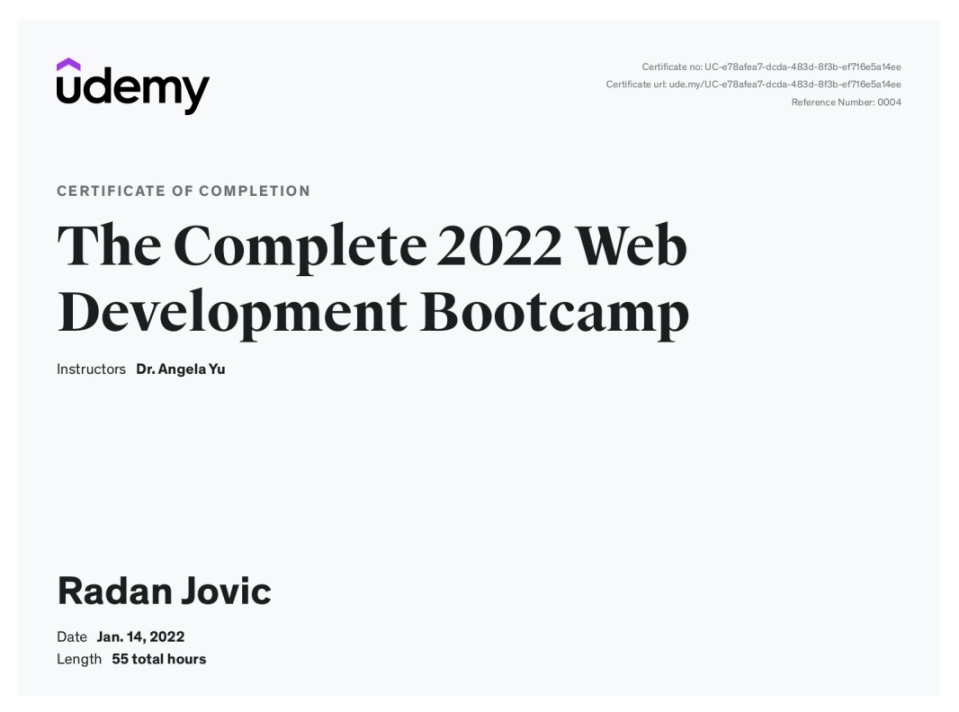
Certificate Name: The Complete Web Development Bootcamp
Issued by: London App Brewery (through Udemy - online learning platform)
Main Technologies taught: HTML, CSS, Bootstrap, JavaScript, jQuery, Git, Node.js, Express.js, ejs, REST APIs, MongoDB, Mongoose, React
The Complete Web Development Bootcamp - Course Overview
The Complete Web Development Bootcamp, taught by wonderful dr. Angela Yu from London App Brewery, is a course designed to be the only course one needs to learn full-stack web development, from scratch. In this course, students learn, from the ground up, about all the technologies that allow full-stack web development with JavaScript - mainly HTML, CSS, JavaScript, Node.js, and React. Additionally, this course teaches about database design with MongoDB and best practices for REST API architecture. On top of this, this course teaches about many other popular libraries used in full-stack development - mainly Boostrap, jQuery, and Express.js. To complete this course and receive a certificate, students must watch all the lectures in the course, pass automated tests created by instructors along the way, and, optionally, code along with the instructor, to familiarize themselves further with web development.
Coursera
Coursera is an online learning platform that partners with more than 200 leading universities and companies to bring flexible, affordable, job-relevant online courses to individuals and organizations worldwide.
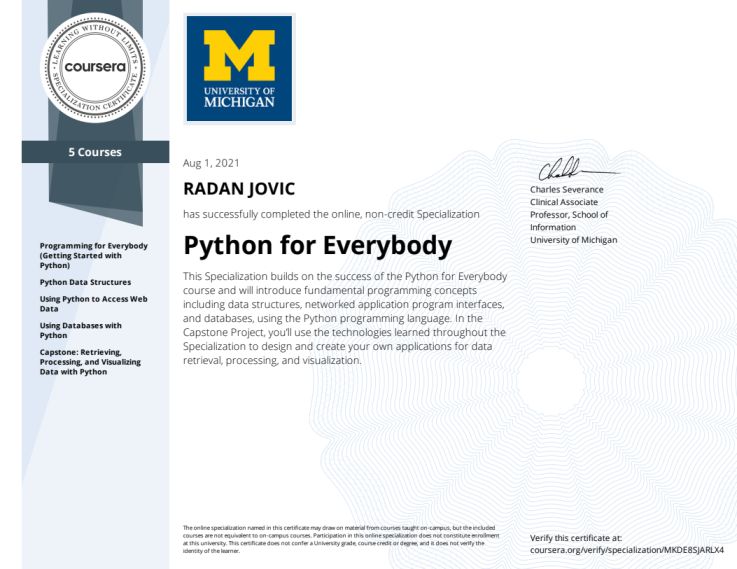
Certificate Name: Python for Everybody - Specialization
Issued by: The University of Michigan (through Coursera - online learning platform)
Main Technologies taught: Python, Data Structures, Web Data Manipulation with Python, Databases and Python, Retrieving, Processing and Visualizing Data with Python
Python for Everybody - Specialization - Course Overview
Python for Everybody is a course offered by the University of Michigan, through the online learning platform Coursera, that teaches students the basics of programming by teaching them basics of Python programming language. The course is taught by dr. Charles (Chuck) Severence, a legend in the field. This course teaches students about Python (and programming) fundamentals (variables, loops, functions, data structures), and about working with Python and Data (databases, extraction, visualization, etc.). To complete this course and receive a certificate, students must watch all the lectures in the course, and pass all the automated tests and quizzes created by instructors. Students are also encouraged to code along with the instructors.
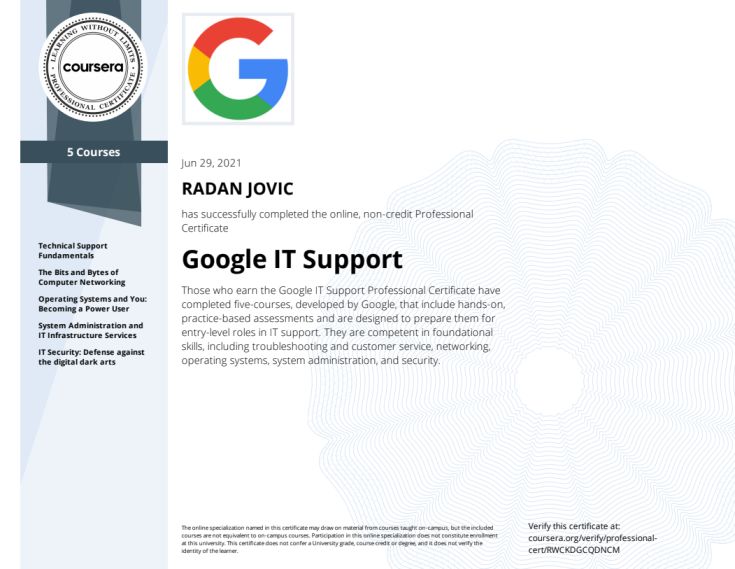
Certificate Name: Google IT Support
Issued by: Google (through Coursera - online learning platform)
Main Technologies taught: Technical Support Fundamentals, Computer Networking, Operating Systems, System Administration, IT Infrastructure Services, IT Security
Google IT Support - Course Overview
Google IT Support certification consists of 5 different courses offered by Google employees, that teach students about different fields of IT support. Course content is developed by Google and includes hands-on, practice-based lectures and assessments designed to provide entry foot into the world of IT and IT support. To complete this course and receive a certificate, students must watch all the lectures in the course, and pass all the automated tests and quizzes created by instructors.